Top 4 VAR Decisions (2026): What 4 Reviews Taught Me
Video Assistant Referee (VAR) is a football officiating system in which a trained match official reviews live and replay footage to help the referee correct a clear and obvious error or serious missed...

Top 4 VAR Decisions (2026): What 4 Reviews Taught Me
Video Assistant Referee (VAR) is a football officiating system in which a trained match official reviews live and replay footage to help the referee correct a clear and obvious error or serious missed incident. VAR operates through an approved competition setup, using multiple camera feeds, a Video Operation Room, and communication with the on-field referee. Under the International Football Association Board (IFAB) protocol, reviews cover four categories: goal or no goal, penalty or no penalty, direct red cards, and mistaken identity. The referee still makes the final decision, whether after receiving VAR information or conducting an on-field review. VAR does not automatically replace every judgment, and there is no fixed review time limit. The practical takeaway is simple: when watching a 2026 FIFA World Cup match, focus on the original decision, the reviewable incident, and whether the evidence proves a clear error.
Imagine a World Cup goal exploding into celebration, then the referee touching an earpiece while the stadium holds its breath. I was once burned by a scam site that promised “instant certainty,” so I have one stubborn rule now: never trust a dramatic claim until I check the actual protocol. VAR is not magic, and it is not a second referee with unlimited authority. It is a controlled review process built around specific incidents, approved technology, and the final responsibility of the referee. That distinction matters to supporters, analysts, broadcasters, and anyone following match predictions on Stadium View, because a five-second replay can change the story without changing the rules. The surprise is what VAR cannot review as much as what it can.
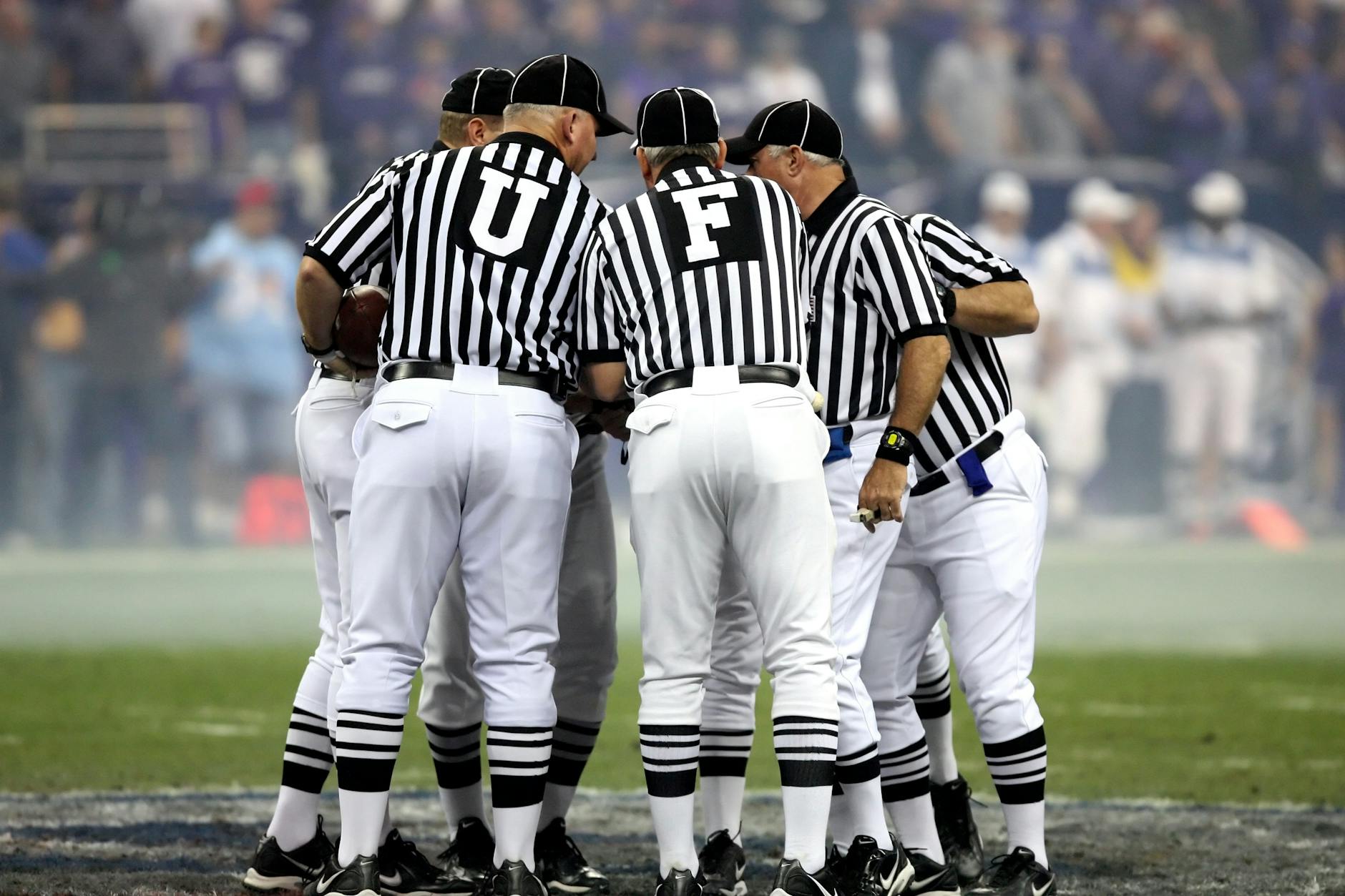
Photo by Pixabay on Pexels
To understand the system properly, it helps to separate four different questions: what incident is being checked, who initiates the review, what evidence is available, and who announces the final decision. The answers are more precise than most terrace arguments. According to IFAB’s official VAR protocol, the referee must always make an initial decision; VAR can recommend a review, but only the referee can initiate it. That is the first fact I would put on a stadium wall, believe it or not — I do.
Want a clearer match-analysis framework before the next major tournament?
The Top 4 VAR Decisions at a Glance
VAR in association football is limited to four core decision areas under the IFAB protocol, although each area can involve several connected events. The ranking below is not a ranking of importance; it is a practical guide to the decisions most likely to affect a match result. Goal reviews lead because they can overturn the scoreline, while mistaken-identity checks tend to be less visible but remain essential for fair discipline.
- Goal or no goal — Checks offside, fouls, handball, and other attacking-phase violations before a goal.
- Penalty or no penalty — Reviews whether a punishable offence occurred inside the penalty area.
- Direct red card — Examines serious foul play, violent conduct, or other send-off incidents.
- Mistaken identity — Corrects a yellow or red card given to the wrong player.
A useful warning sits underneath this list: VAR does not review every corner, throw-in, foul, or yellow card simply because a replay exists. The protocol is deliberately narrow, and the original decision normally stands unless the video evidence demonstrates a clear and obvious error. That phrase is not decorative legal language; it is the threshold that prevents every subjective disagreement from becoming a stoppage. The FIFA Laws of the Game also matter because VAR applies the Laws rather than inventing a separate standard for televised matches.
What happens during a VAR check?
A VAR check automatically examines relevant footage while play continues or after a stoppage, then recommends action only if a reviewable error or serious missed incident may have occurred. The referee receives information through the communication system and either accepts the factual advice or performs an on-field review. The final decision remains the referee’s responsibility.
The sequence usually looks like this:
- The referee makes an initial call, or allows play to continue.
- The VAR and assistant VAR inspect available camera angles.
- They identify whether the incident falls within a reviewable category.
- They recommend a review only when the threshold may be met.
- The referee studies the footage or accepts factual information.
- The referee communicates the final decision and restarts play.
The most misunderstood step is number two. VAR is not supposed to search for a reason to overturn the referee. It checks the decision against the available evidence. For factual matters such as an offside position or whether the ball crossed the goal line, technology may provide a highly precise answer. For subjective matters such as the severity of a tackle, the referee’s judgment remains central. Slow motion can clarify contact, but it can also make ordinary football movement appear unnaturally violent, which is why speed and context both matter.
#1 Goal or No Goal: Why Is This VAR’s Biggest Assignment?
Goal and no-goal reviews are VAR’s most consequential assignment because they can verify whether the entire attacking phase leading to a goal contained an offside offence, foul, handball, or ball-out-of-play incident. The review can overturn a goal, award one, or confirm the referee’s original decision.
A goal is not assessed only at the instant the ball crosses the line. VAR may examine the attacking phase that immediately preceded the goal, depending on the Laws and the incident itself. That can include the passer’s position, a teammate’s interference with an opponent, a handball before the finish, or a foul during the buildup. The key is not “did something unpleasant happen five minutes earlier?” but whether the event is connected to the goal and falls within the permitted review window.
Offside illustrates the difference between objective and subjective review. Camera calibration, player positions, and the moment the ball is played help officials establish factual relationships. Yet the definition of interfering with an opponent can still require judgment. The system may draw lines, but the line does not decide every legal question by itself. I check whether reports distinguish the measured position from the interpretation, because confusing those two is how exaggerated social-media explanations begin.
A second edge case deserves attention: once a goal is confirmed, misconduct occurring after the incident may still be punished even if the goal is later disallowed. IFAB’s protocol states that disciplinary action during the period after a reviewable incident is not automatically cancelled by a changed decision, subject to specific exceptions. In plain English, changing the goal decision does not erase every later offence. That detail rarely makes the highlight package, but it matters when evaluating a controversial match.
Read the tactical context behind goals, pressing triggers, and offside traps with the latest tournament analysis.
[Internal Link: World Cup offside rules explained]
#2 Penalty or No Penalty: How Does VAR Judge Box Incidents?
Penalty reviews determine whether a foul or handball inside the penalty area should result in a penalty, whether an awarded penalty was incorrect, or whether a major missed offence should be addressed. VAR normally intervenes only when the original decision is a clear and obvious error or a serious missed incident.
Penalty-area incidents are difficult because several judgments overlap. Officials must consider the point of contact, the players’ movement, whether the challenge was careless or reckless, whether the defender played the ball, and whether the attacker initiated or exaggerated contact. A replay can show where a boot landed, but it cannot remove the referee’s duty to interpret the action under the Laws of the Game.
The review process also explains why a referee may change “no penalty” to penalty without a long monitor sequence, or may inspect the screen for a more subjective decision. A factual question, such as whether contact happened inside or outside the penalty area, may be settled through communication. A judgment question, such as whether the contact was a foul, commonly receives an on-field review. This is not a guaranteed formula, but it is a useful viewing clue.
Handball creates another trap. The ball touching an arm is not automatically an offence. The referee considers arm position, body movement, distance, and the circumstances defined by the Laws. The International Football Association Board publishes the governing Laws and protocol, so an online clip claiming “any touch equals a penalty” should immediately set off alarm bells. I learned that habit the expensive way on a completely unrelated scam site, and I am keeping it.
#3 Direct Red Cards: When Can VAR Intervene?
VAR can assist with direct red-card decisions involving serious foul play, violent conduct, spitting, biting, or extremely offensive, insulting, and abusive actions. It does not generally review a clearly incorrect second yellow card, although mistaken identity remains reviewable when the wrong player is punished.
The distinction between a direct red card and a second caution is one of the rules fans most often miss. VAR’s authority is not a general appeal mechanism for every dismissal. If a player receives a second yellow card and is sent off, the incident is normally outside VAR’s direct-red review category unless another reviewable issue, such as mistaken identity, is involved. That boundary protects the referee’s original disciplinary structure and keeps the system from expanding indefinitely.
Serious foul play requires attention to intensity, control, speed, point of contact, and danger to the opponent. Slow-motion footage may reveal studs contacting the shin, but officials must also judge the complete action. The video assistant may recommend an on-field review, yet the referee decides whether the challenge meets the red-card standard. This is why two people can watch identical footage and still discuss the decision honestly without pretending the camera has produced a mathematical answer.
There is also a time-related exception. If play has stopped and restarted, a review is normally no longer available, but IFAB identifies narrow exceptions such as mistaken identity and certain violent or abusive conduct offences. That is not a loophole for reopening any old tackle. It is a safeguard for especially serious incidents where allowing the wrong player to remain punished would be worse than disrupting the restart.

Photo by BOOM 💥 Photography on Pexels
Would a disciplined review of match incidents improve your 2026 football predictions?
#4 Mistaken Identity: Why Does the Smallest Category Matter?
Mistaken-identity reviews correct situations in which the referee cautions or sends off the wrong player for an offence. VAR can help identify the actual offender, but the system does not transform every disputed booking into a reviewable incident. The purpose is accurate disciplinary responsibility, not unlimited card appeals.
This category may feel less dramatic than a disallowed goal, yet it can change a match over ninety minutes. A wrongly dismissed defender creates a tactical and numerical consequence, while an incorrectly booked midfielder may later be sent off after a second caution. The correction must identify the player involved in the offence, not merely the player standing nearest to a confrontation.
A practical viewing tip is to watch the referee’s body language after a group incident. When several players are involved, the official may need help separating the original offence from reactions that occur afterward. VAR can provide footage, but the referee still decides what happened and which disciplinary action follows. Players surrounding the referee or attempting to influence the process are not entitled to demand a review; IFAB explicitly says that the automatic checking process means requests from teams are unnecessary.
This is also where the “VAR takes forever” complaint can become misleading. There is no fixed maximum review duration in the protocol because accuracy takes priority over an arbitrary stopwatch. However, a competition can still improve communication, camera coverage, and referee visibility to make the process feel more transparent. Delay and correctness are related, but they are not identical problems.
[Internal Link: football referee signals and match rules]
How Does the VAR Technology Work?
A VAR system combines multiple broadcast-quality camera feeds, a Video Operation Room, replay controls, calibrated field views, and secure referee communication. VAR officials review the same match from an independent location, while the on-field referee can receive factual advice or inspect a pitchside monitor. The system is only permitted after competition implementation requirements and FIFA authorization are satisfied.
The equipment is important, but the workflow matters more. A typical setup includes:
- Several high-definition cameras positioned around the stadium.
- Dedicated replay operators who can locate and slow key moments.
- Offside camera angles and calibrated field references where available.
- Communication links between the referee, VAR, and assistant VAR.
- A Video Operation Room at the venue or an approved remote facility.
- A pitchside review area for on-field reviews.
- Match records documenting the incident and decision process.
Camera count varies by competition, and not every angle is equally useful. A camera behind the goal may reveal goalkeeper movement, while a wide tactical angle may establish whether an attacker interfered with an opponent. Broadcast footage is not automatically identical to the official review feed, which is why television viewers can sometimes see a different replay or angle than the VAR team.
Another information point is often overlooked: the referee must remain visible during the review process to support transparency. That does not mean every conversation is broadcast word for word, nor does it guarantee that spectators will understand every frame. It means the process is designed so the referee, rather than an unseen technology operator, remains accountable for the final call. For Stadium View readers analysing formations and match momentum, that distinction helps prevent the lazy conclusion that “the computer gave the decision.”
What Is the Difference Between a VAR Check and an On-Field Review?
A VAR check is the automatic examination of a potentially reviewable incident, while an on-field review is the referee’s personal inspection of replay footage at the pitchside monitor. VAR may recommend a review, but only the referee can initiate it and make the final decision. Not every check requires the referee to watch the monitor.
The difference is especially clear in factual offside decisions. If the video team establishes that an attacker was offside and the relevant conditions are satisfied, the referee may receive the information without conducting a lengthy on-field review. In contrast, penalty severity or a red-card threshold can involve interpretation, making direct viewing by the referee more likely.
The phrase “VAR overturned it” is therefore technically incomplete. VAR can identify a possible error and recommend action, but the referee owns the decision. In a 2026 FIFA World Cup match, the visible hand signal, announcement, and restart remain part of the referee’s responsibility even if the evidence was prepared by officials elsewhere.
The protocol also says that players and team officials must not surround the referee or attempt to influence the review. That rule is practical rather than cosmetic: a crowd of players can obstruct communication, create intimidation, and make an already complicated process harder to manage. Calm does not guarantee a correct call, but chaos reliably makes the experience worse.
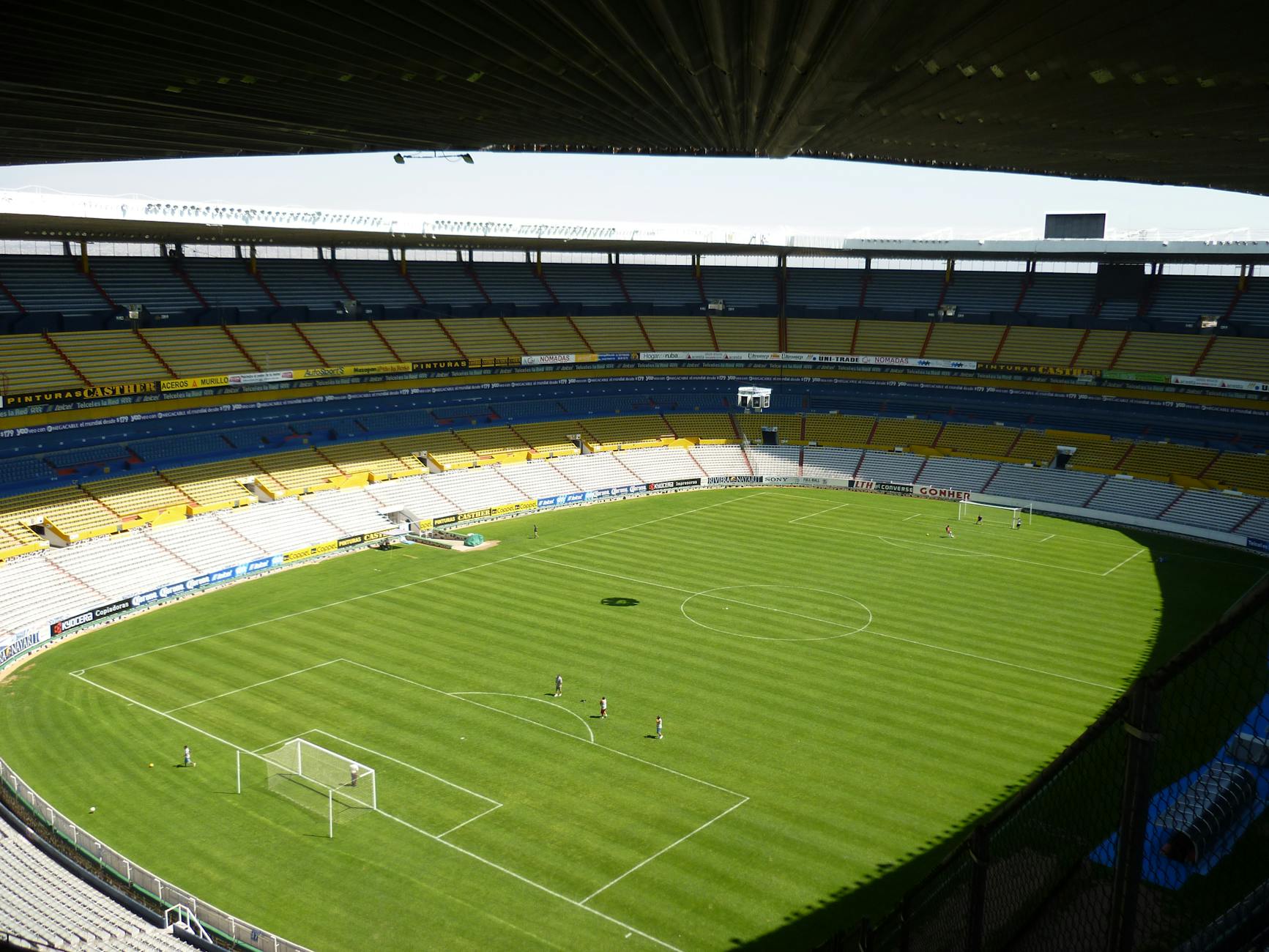
Photo by Juan García on Pexels
How We Ranked Them
This ranking weighs match impact at 40%, frequency of use at 25%, complexity of interpretation at 20%, and disciplinary or tactical consequences at 15%. The framework is designed for viewers and analysts rather than officials, so it measures how each category changes the match story while preserving the formal IFAB limits.
I used four practical tests:
Can the decision change the scoreline?
Goals and penalties receive the greatest impact because they directly affect results.Does the footage answer a factual question?
Offside and boundary evidence can be clearer than subjective foul interpretation.Can one decision alter team tactics?
A red card or penalty may reshape defensive structure, pressing, and substitutions.Is the category commonly misunderstood?
Mistaken identity and second-yellow limitations deserve extra explanation because casual summaries often blur them.
This is not an official FIFA ranking, and I would not pretend otherwise. It is an editorial model for understanding VAR, built around the IFAB protocol and the actual categories used in elite football. The most useful contrarian conclusion is that the “best” VAR decision is not always the most visible one. A quiet mistaken-identity correction may protect competitive fairness more effectively than a spectacular goal-line reversal, even though fewer viewers remember it.
Which Should You Pick: What Should Fans Watch For?
Fans should track the incident category first, the referee’s original decision second, and the evidence threshold third. For goal reviews, watch the attacking phase and offside reference; for penalties, watch location and contact; for red cards, watch the complete challenge; for mistaken identity, watch who committed the original offence. This method is more reliable than reacting to the loudest replay.
If you follow football for analysis, predictions, or tournament coverage, record the following before judging a decision:
- What did the referee initially call?
- Did play continue, and for how long?
- Is the incident one of the four VAR categories?
- Is the evidence factual, subjective, or both?
- Did the referee conduct an on-field review?
- Was the restart already taken?
- Did later misconduct remain punishable?
This checklist is useful because emotional certainty arrives faster than reliable evidence. A goal may be disallowed for an offence viewers missed, while a dangerous-looking tackle may remain a yellow card because the red-card threshold is not met. Stadium View can provide match predictions, player statistics, team tactics, and 2026 FIFA World Cup coverage, but no serious analyst should treat a VAR controversy as settled until the applicable Law and review category are identified.
For more tournament context, compare the decision with lineups, substitutions, and tactical changes rather than isolating one replay.
[Internal Link: 2026 World Cup match predictions]
The bottom line is not that VAR eliminates mistakes. It narrows the most damaging mistakes through a defined process, then leaves the final judgment with the referee. “The final decision is always taken by the referee,” the IFAB protocol states, and that sentence should end the fantasy that a hidden machine independently controls football. Check the category, check the evidence, and check the restart before declaring injustice. Believe it or not — I do.
Want the latest football decision analysis and tournament updates in one place?
Frequently Asked Questions
Q: What is VAR in football?
A: VAR means Video Assistant Referee, an officiating support system that reviews footage for four categories of potentially match-changing incidents. Those categories are goal or no goal, penalty or no penalty, direct red cards, and mistaken identity. The VAR is a match official with independent access to video, not an automated decision-making program. Under the IFAB protocol, the on-field referee always makes the final decision.
Q: How does VAR work step by step?
A: VAR automatically checks relevant incidents, reviews the available camera angles, and recommends action only when a clear and obvious error or serious missed incident may have occurred. The referee then receives factual information or conducts an on-field review at the pitchside monitor. The referee communicates the final decision before play restarts. Players and coaches do not need to request a review because every relevant situation is checked automatically.
Q: What is the difference between VAR and an on-field review?
A: VAR is the video-checking process, while an on-field review is the referee’s personal inspection of replay footage. A VAR can recommend an on-field review, but cannot force one or make the final decision. Factual matters such as some offside situations may be resolved through communication, while subjective penalty and red-card judgments more often require the referee to view the monitor.
Q: Why does VAR sometimes take so long?
A: VAR can take time because officials must identify the correct incident, examine multiple angles, apply the Laws of the Game, and confirm the restart and disciplinary consequences. IFAB does not impose a fixed maximum review time because accuracy has priority over speed. Camera availability, offside calibration, crowded penalty-area incidents, and subjective contact judgments can all extend the process.
Q: Can VAR review every foul or yellow card?
A: No, VAR cannot review every foul, ordinary yellow card, corner, or throw-in. Its permitted football categories are goal or no goal, penalty or no penalty, direct red card, and mistaken identity. A clearly incorrect second yellow card is generally outside direct VAR review, although a mistaken-identity issue or certain exceptional serious offences may still qualify under the protocol.
Q: Can a referee review an incident after play restarts?
A: Normally, a referee cannot review a completed incident after play has stopped and restarted. IFAB provides narrow exceptions, including mistaken identity and certain potential send-off offences involving violent conduct, spitting, biting, or extremely offensive, insulting, and abusive actions. This restriction prevents matches from repeatedly reopening old incidents while preserving protection against especially serious errors.
Q: Does VAR make football completely fair?
A: VAR improves accuracy in reviewable incidents but cannot guarantee perfect or universally accepted decisions. Cameras may clarify factual issues, while judgments about fouls, handball, interference, and serious foul play still depend on the Laws and referee interpretation. The strongest protection is disciplined procedure: identify the category, apply the clear-and-obvious-error threshold, and keep the final decision with the referee.
Thank you for reading.
Stadium View · Editorial Archive · 2026