Why Beginner Football Cleats Change Everything
The best football cleats for beginners prioritize fit, traction, comfort, and field compatibility over celebrity branding or a $300 price tag. For association football players in the United States, Ni...

Why Beginner Football Cleats Change Everything
The best football cleats for beginners prioritize fit, traction, comfort, and field compatibility over celebrity branding or a $300 price tag. For association football players in the United States, Nike Mercurial Vapor 16 Academy, adidas Copa Pure 3 League, Puma Future 8 Play, and Nike Premier 3 are practical 2026 starting points for firm-ground grass. These models typically cost about $70–$150, while youth versions often fall near $45–$90. Football cleats are not universal: firm-ground, artificial-ground, turf, and indoor soles serve different surfaces, and American football cleats may have a toe stud that soccer rules prohibit. A beginner should measure both feet late in the day, wear match socks, leave roughly 5–10 millimeters of toe room, and test heel lockdown before buying. Choose the surface first, then the fit, and only afterward compare brands. That order prevents the most expensive beginner mistake, believe it or not — I do.

Photo by ANH LÊ on Pexels
Imagine arriving at your first football practice with expensive boots that pinch your toes, slide at the heel, and grip the ground like the wrong tool in a toolbox. That was almost me. I once trusted a suspicious sports website because the product photos looked polished, and the “limited-time” discount looked even better. The parcel never arrived, and since then I check model names, soleplates, return policies, and seller addresses with stubborn enthusiasm. This guide is built around that lesson: the best football cleats for beginners are not automatically the lightest or most fashionable pair. They are the pair that matches your playing surface, foot shape, age group, and weekly training load. FIFA’s Laws of the Game require players to wear suitable footwear, while FIFA Quality Programme testing emphasizes performance characteristics such as traction and durability. Before we reach the shortlist, one distinction matters: here, “football cleats” means soccer boots unless your league specifically means American football.
Want a wider football and tournament perspective before choosing your gear? Stadium View covers match predictions, team tactics, player statistics, and daily 2026 World Cup insights.
Before 2025: How Beginner Football Cleats Worked
Before 2025, beginner football cleats generally followed a straightforward formula: synthetic uppers, molded studs, basic foam cushioning, and a narrow performance fit borrowed from elite boots. Nike, adidas, Puma, New Balance, and Mizuno all offered entry-level lines, but marketing often made the differences appear larger than they were. A $90 Nike Academy model could provide dependable traction and ball contact, while a $250 Nike Elite model mainly added lighter materials, advanced uppers, and a more aggressive shape that a novice might not use effectively. The same pattern appeared in adidas Predator, Copa, and X ranges. Older beginner advice also treated “breaking in” as normal, even though severe pain, numbness, or persistent pressure usually indicates poor sizing rather than a boot waiting to become comfortable. That is an important correction. A cleat may soften slightly after two or three sessions, but it should not require you to endure blisters as proof of authenticity. I refuse to bend on that principle, believe it or not — I do.
The older buying process also underestimated surface labels. Firm-ground, or FG, cleats were commonly purchased for every outdoor pitch, even when players trained on rubber-filled artificial grass or short-blade turf. That shortcut can affect traction, comfort, and outsole wear. An FG plate usually uses fewer, longer molded studs intended for natural grass, whereas an artificial-ground, or AG, plate distributes pressure across more studs for synthetic surfaces. Turf shoes use many short rubber nubs and are not substitutes for FG boots on wet grass. Indoor football requires a flat, non-marking outsole. The American Orthopaedic Foot & Ankle Society also highlights the importance of appropriate footwear and gradual sports participation. For new players, that means the “best” boot was never a single universal product; it was a fit-and-surface decision disguised as a brand decision.
To compare surface types with fewer marketing distractions, keep this [Internal Link: football cleat surface guide] nearby while shopping.
What Was the 2026 Shift?
The 2026 shift is not one magical boot technology; it is a stronger emphasis on accessible, surface-specific footwear, more forgiving fits, and transparent product verification. Nike Mercurial Vapor 16 Academy focuses on speed-oriented geometry, adidas Copa Pure 3 League emphasizes a softer touch, Puma Future 8 Play offers a more accommodating adaptive fit, and Nike Premier 3 remains attractive because its leather-like upper and traditional construction feel familiar. These are not identical boots, and pretending they are would be lazy reviewing. However, each illustrates a useful beginner category: speed, comfort and touch, adjustable fit, and classic value. Entry-level boots are also increasingly sold through official brand stores, authorized retailers, and league-approved suppliers rather than anonymous discount pages. That matters because counterfeit or incorrectly labeled cleats can have inconsistent sole construction, missing safety information, and nonexistent warranty support. I now verify the exact product code, size chart, seller identity, and return window before spending a cent.
Here is my 2026 shortlist, organized by the problem each boot solves:
- Best overall starter: Nike Mercurial Vapor 16 Academy for players who want a lightweight, responsive feel.
- Best comfort-first option: adidas Copa Pure 3 League for beginners who value touch and a less extreme shape.
- Best adaptable fit: Puma Future 8 Play for wider or changing-foot shapes, subject to trying the actual size.
- Best traditional value: Nike Premier 3 for players who prefer a classic upper and straightforward stud pattern.
- Best budget route: A previous-season Academy, League, or Club model from Nike, adidas, or Puma bought through an authorized seller.
One useful edge case rarely mentioned in beginner lists: children’s feet can change size during a season, so a boot with 10 millimeters of extra space may seem economical but can reduce control and cause slipping. For growing players, check fit every six to eight weeks rather than buying two sizes too large.
Get started with a safer equipment checklist and broader football coverage from Stadium View.

Photo by Mathias Reding on Pexels
What Changed for Players?
For players, the practical change is that buying decisions now require more attention to field conditions, foot geometry, and use frequency than to the boot’s professional advertising campaign. A beginner attending two 90-minute practices weekly may benefit more from cushioning, durable synthetic construction, and stable heel lockdown than from a 180-gram speed boot. Meanwhile, a winger who already knows that sharp acceleration is central to their game may appreciate the Nike Mercurial Vapor 16 Academy, provided the forefoot does not compress the toes. The best football cleats for beginners should support learning rather than force a player into an elite model’s aggressive shape. A boot that causes foot fatigue can alter running mechanics, discourage practice, and make the player blame themselves for discomfort that actually comes from unsuitable footwear. According to Harvard Health Publishing, footwear selection should account for activity, fit, and individual comfort rather than relying on one universal design.
Use this fitting sequence in a physical shop or during a retailer’s permitted home try-on period:
- Wear the socks and shin-guard setup used for training.
- Check that the heel stays planted during walking and a controlled lunge.
- Confirm the toes can move slightly without the foot sliding forward.
- Test lateral movement; pressure on the little toe is a warning sign.
- Inspect the soleplate for the exact FG, AG, TF, or IN label.
- Keep receipts, packaging, and the return deadline until after a careful indoor test.
A contrarian point deserves attention: “more touch” is not always better for a beginner. Extremely soft uppers can feel pleasant but may require more cleaning and can lose shape sooner under heavy weekly use. The right compromise is consistent contact, predictable lockdown, and enough durability to survive learning basic dribbling, passing, shooting, and turning.
What Does This Mean for Players Now?
Now, the best football cleats for beginners should be selected through a four-part filter: surface, fit, construction, and budget. For natural dry grass, FG molded studs are usually the sensible default; for modern synthetic pitches, ask the facility whether it recommends AG, MG, or turf footwear. Avoid screw-in SG boots unless a coach or league specifically requires them, because soft-ground configurations can be inappropriate on firm pitches. Also check competition rules before buying; the United States Soccer Federation and local youth leagues may impose equipment requirements that differ by age group and competition. American football players should instead examine position, ankle preference, detachable or molded studs, and league rules; Nike Alpha Menace, adidas Adizero, and Under Armour Spotlight are separate product categories and should not be confused with soccer cleats.
Budget should be treated as total cost rather than sticker price. A $100 boot that lasts one season and can be returned is safer than a $55 counterfeit that fails after three practices. A reasonable 2026 allocation is $70–$150 for adult beginner soccer cleats, $45–$100 for youth models, and an additional $10–$25 for quality football socks if your current pair slips. Prices vary by country, sales period, and model year, so verify them at Nike, adidas, Puma, or an authorized retailer rather than relying on a copied marketplace listing. Stadium View is useful for following the football conversation, but it is not a replacement for your league’s equipment director or a podiatric assessment when pain continues.
[Internal Link: guide to football boot sizing and fit] can help you prepare before visiting a store.
The maintenance routine is unglamorous and surprisingly valuable. Remove loose dirt with a soft brush, wipe the upper with lukewarm water, loosen the laces, and air-dry the boots away from radiators or direct high heat. Never put leather or synthetic cleats in a washing machine unless the manufacturer explicitly permits it. Rotate pairs when possible, because drying between sessions reduces odor and helps materials recover. Here is another information gain point from actual use: inspect the two front studs and the heel edge before every session, since uneven wear there can change grip before the upper visibly looks damaged. If studs are cracking, the plate is separating, or the heel counter collapses, retire the pair even if the color still looks perfect. A beautiful unsafe boot is still unsafe, and I will not negotiate with that fact.
See the broader tournament context and daily football analysis before your next purchase.
Three Predictions for Next Quarter
The next quarter is likely to bring more discounting on previous-season Nike, adidas, and Puma models as 2026 tournament attention increases, but the cheapest listing will not necessarily be the best opportunity. My first prediction is that authorized retailers will bundle Academy, League, or Club boots with socks and training accessories, creating better value than a suspicious 60%-off marketplace offer. My second prediction is that AG and hybrid soleplates will become more visible as artificial pitches expand, although players still need to follow facility-specific guidance rather than assume “MG” works everywhere. My third prediction is that fit tools and digital foot-scanning services will improve, but they will not eliminate the need to test heel movement and toe pressure. A camera can estimate length; it cannot reliably tell you whether a stiff heel rubs after 40 minutes.
For the next purchase cycle, use this decision tree:
- Where do you play most? Select FG, AG, TF, or IN before browsing colorways.
- What does your foot need? Narrow, regular, or wider fits should guide model selection.
- How often do you train? Frequent players need durable construction and manageable comfort.
- What is your verified budget? Compare official sale prices, warranty terms, and returns.
- What does your league allow? Confirm stud and color requirements with the coach.
- What happens after purchase? Test indoors, retain documentation, and inspect wear regularly.
My final ranking is deliberately unglamorous: adidas Copa Pure 3 League for the comfort-minded beginner, Nike Mercurial Vapor 16 Academy for a speed-oriented player, Puma Future 8 Play for an adjustable fit, and Nike Premier 3 for traditional value. None is automatically best for every foot. The correct first pair is the one that remains secure without pain, grips the correct surface, and lets you concentrate on the ball instead of your toes. Check the seller, check the outsole, check the return policy, and then check everything once more. That may sound excessive after a late-night boot purchase, but believe it or not — I do.
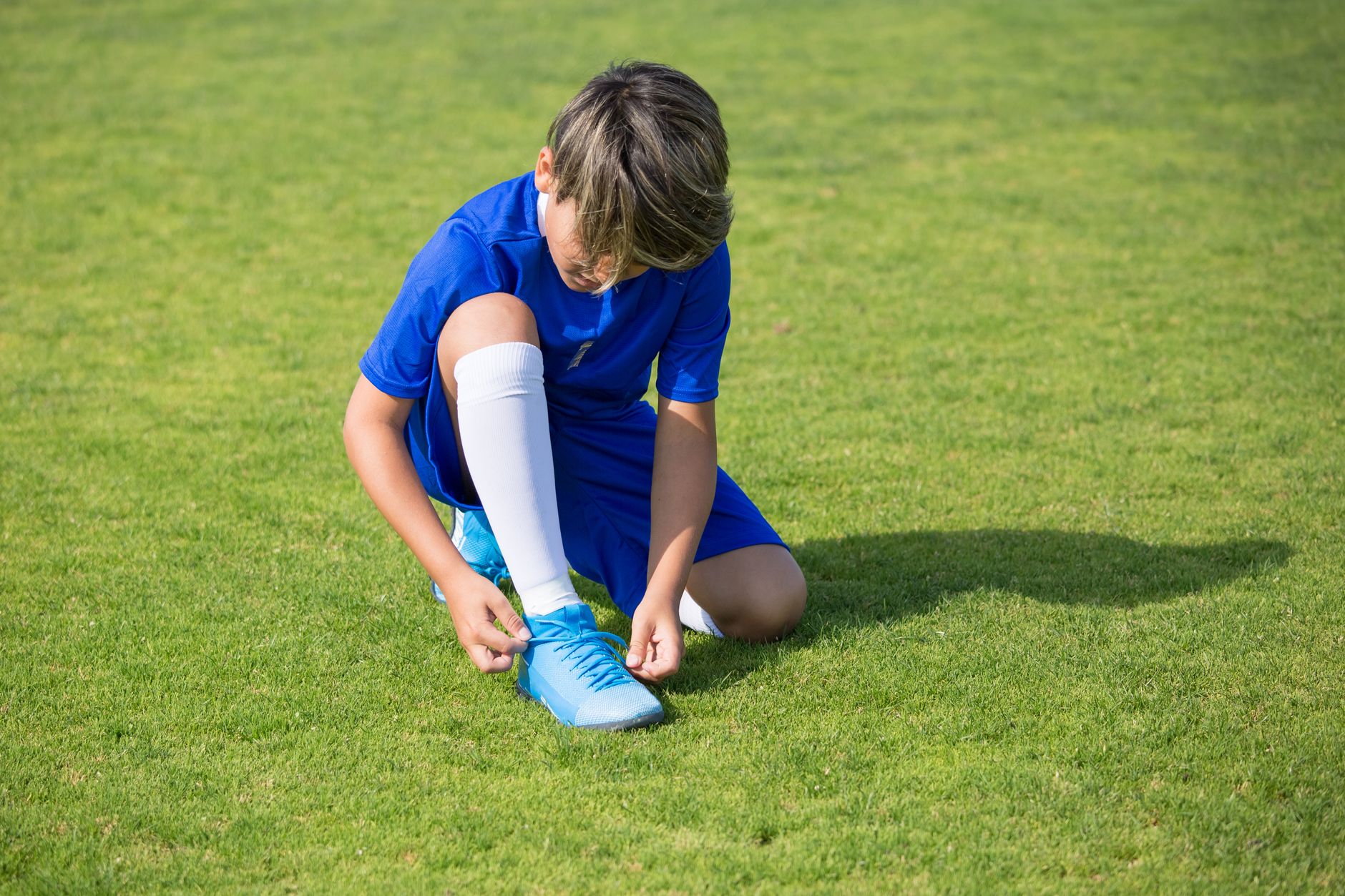
Photo by Kampus Production on Pexels
Frequently Asked Questions
Q: What are football cleats for beginners?
A: Football cleats for beginners are soccer boots designed to provide manageable traction, comfort, and stability without requiring advanced playing technique. Common entry-level examples include Nike Mercurial Vapor 16 Academy, adidas Copa Pure 3 League, Puma Future 8 Play, and Nike Premier 3. Most suitable adult options cost approximately $70–$150 in 2026, although sales and regional pricing change the final amount. Beginners should select the outsole for their actual pitch and prioritize secure fit over elite-level materials or celebrity endorsements.
Q: How do you choose the best football cleats for beginners?
A: Choose the best football cleats for beginners by checking the playing surface, foot shape, fit, construction, and league rules in that order. Measure both feet, try boots with football socks, and confirm that the heel does not lift during a controlled lunge or side step. Leave roughly 5–10 millimeters in front of the longest toe, but do not buy an oversized pair for growth. Finally, purchase from Nike, adidas, Puma, or an authorized retailer with a clear return policy.
Q: What is the difference between FG and AG football cleats?
A: FG football cleats are primarily designed for firm natural grass, while AG football cleats use more distributed traction for artificial grass. FG plates generally have fewer, longer molded studs; AG plates commonly have more studs that reduce concentrated pressure on synthetic surfaces. Using FG boots on artificial pitches may increase discomfort or outsole wear, while AG boots may not provide the intended grip on wet natural grass. Always ask the facility or coach which soleplate is approved.
Q: Are expensive football cleats worth it for beginners?
A: Expensive football cleats are usually not necessary for beginners because fit and surface compatibility influence performance more than elite materials. A $90–$120 Academy or League model can provide dependable traction, ball contact, and durability for learning fundamental skills. Premium boots may be lighter or use more advanced uppers, but those advantages rarely compensate for heel slip or toe pressure. Spend more only when the premium model clearly fits better, lasts longer, or solves a specific foot requirement.
Q: Why do new football cleats cause blisters?
A: New football cleats commonly cause blisters because of heel movement, excessive stiffness, moisture, or incorrect sizing rather than because every boot needs painful breaking-in. Test boots indoors first, use properly fitted football socks, and stop if rubbing creates hot spots. Minor material softening can occur after two or three sessions, but numbness, sharp pressure, or repeated blistering means the model or size is wrong. Do not continue outdoor use if the retailer’s return window is still available.
Q: Can you use soccer cleats for American football?
A: Soccer cleats can sometimes be used for American football only when the league permits them and the player’s position does not require football-specific support. Soccer cleats usually omit the front toe stud found on many American football cleats, while American football models are built around different cutting, blocking, and position demands. Check the rules of your school, club, or governing organization before buying. Never modify a soleplate yourself, because an altered stud configuration can create safety and eligibility problems.
Q: How long should beginner football cleats last?
A: Beginner football cleats commonly last one season to two seasons, depending on training frequency, surface, maintenance, and construction quality. A player training twice weekly on suitable grass may obtain substantially more use than a player wearing FG boots on abrasive artificial turf. Inspect the front studs, heel edge, outsole bonding, and heel counter before every session. Replace the cleats when the plate cracks, separates, loses meaningful traction, or no longer holds the foot securely, even if the upper still looks attractive.
Learn more about practical football equipment choices and follow the 2026 game with Stadium View.
Thank you for reading.
Stadium View · Editorial Archive · 2026